
The hidden impact of hearing loss goes far beyond sound — it can dramatically change the way you connect, communicate, and live.
Hearing loss is often thought of as a simple inability to hear sounds clearly. However, the impact of hearing loss goes far beyond the ears. Hearing loss can influence communication, relationships, emotional well-being, education, work performance, safety, and even overall quality of life. Many people do not realize how deeply hearing difficulties can affect daily living until they begin experiencing these challenges themselves.
In today’s fast-moving world, where communication plays a major role in personal and professional success, untreated hearing loss can gradually create barriers that affect confidence, social connections, and mental health. The good news is that early diagnosis and proper hearing care can make a life-changing difference.
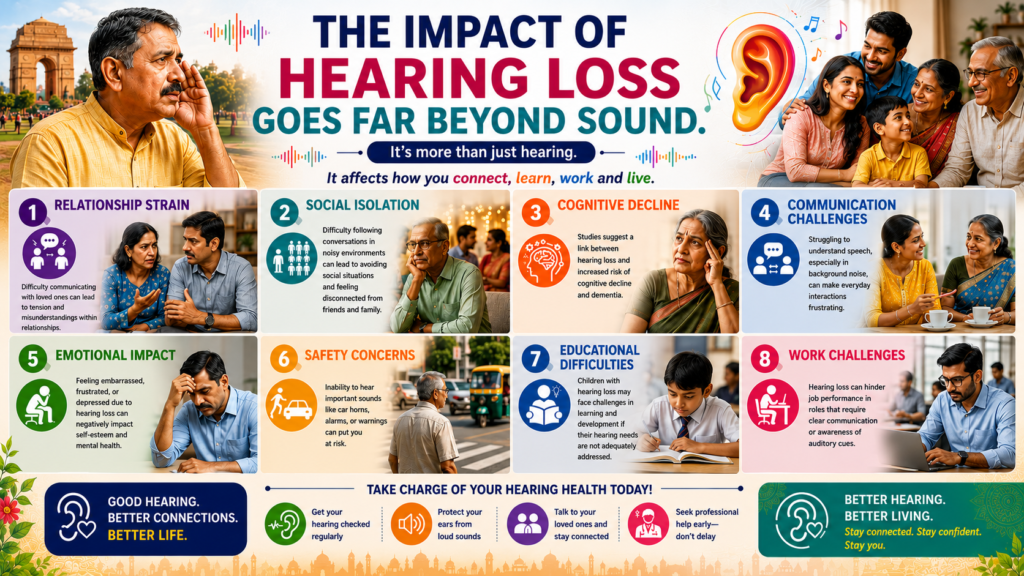
Communication Challenges
One of the earliest and most noticeable signs of the impact of hearing loss is difficulty understanding conversations. People with hearing loss may hear sounds but struggle to understand words clearly, especially in crowded places, family gatherings, restaurants, offices, or social events.
Background noise often makes conversations exhausting. Individuals may frequently ask others to repeat themselves or misunderstand what is being said. Over time, this can lead to frustration for both the person experiencing hearing loss and their loved ones.
Simple daily interactions such as talking on the phone, watching television, attending meetings, or participating in group discussions can become stressful. Many people eventually begin avoiding conversations altogether because they feel embarrassed or tired from constantly trying to keep up. This clearly shows how the impact of hearing loss extends far beyond just hearing sounds
Relationship Strain
Healthy relationships depend heavily on communication. When hearing loss interferes with conversations, misunderstandings and emotional distance can slowly develop between family members, friends, and partners.
The impact of hearing loss on relationships can be emotionally challenging. Loved ones may feel ignored when the person with hearing loss does not respond properly, while the individual experiencing hearing difficulties may feel isolated or blamed for something beyond their control. Repeated communication breakdowns can create tension within families and relationships.
For elderly individuals, the impact of hearing loss can especially affect family bonding. Grandparents may struggle to interact with grandchildren, participate in family celebrations, or engage in meaningful conversations. This emotional disconnect can lead to feelings of loneliness and sadness.
Early hearing intervention and supportive communication strategies can help reduce the impact of hearing loss on personal relationships and improve emotional connection within families.
Social Isolation
Many individuals with untreated hearing loss gradually withdraw from social activities. Difficulty hearing in noisy environments can make social gatherings overwhelming and uncomfortable.
People may stop attending parties, community events, religious gatherings, or social outings because they fear misunderstanding conversations or feeling left out. Over time, the impact of hearing loss can result in social isolation and reduce confidence.
In India, social interactions are an important part of daily life. Festivals, weddings, family events, and community gatherings play a major role in maintaining emotional well-being and cultural connection. When hearing loss prevents someone from actively participating in these moments, it can significantly affect their confidence and happiness.
Social isolation is not just emotionally difficult—it can also negatively impact mental and physical health over time.
Emotional and Mental Health Impact
Hearing loss does not only affect communication; it can also influence emotional health. The impact of hearing loss on mental well-being is often underestimated. Many individuals with untreated hearing loss experience frustration, anxiety, stress, irritability, and low self-esteem.
Struggling to follow conversations every day can be mentally exhausting. Some people feel embarrassed when they misunderstand others or respond incorrectly during discussions. Over time, the impact of hearing loss may reduce self-confidence and increase emotional stress.
Research has also shown a strong connection between untreated hearing loss and mental health concerns such as depression and anxiety. Constant isolation and communication challenges can create feelings of loneliness and helplessness.
Seeking professional hearing care can greatly improve emotional well-being by restoring communication confidence and reducing stress in daily life.
Cognitive Decline and Brain Health
The impact of hearing loss can also be on brain function. Studies suggest that untreated hearing loss may increase the risk of cognitive decline and memory-related issues.
When the brain receives reduced sound stimulation over long periods, it must work harder to process incomplete information. This additional mental effort may affect concentration, memory, and cognitive performance.
Older adults with untreated hearing loss are at a higher risk of developing dementia-related conditions compared to those who manage their hearing difficulties early.
Using hearing aids and receiving proper hearing treatment can help reduce the cognitive impact of hearing loss, improve mental stimulation, and support overall cognitive health. To know more – HEARING LOSS AND BRAIN HEALTH)
Educational Difficulties in Children
Hearing plays a vital role in speech, language development, and learning. The impact of hearing loss in children often extends to classroom learning, pronunciation, reading development, and school performance.
If hearing difficulties are not identified early, children may struggle to follow instructions, participate in classroom activities, or interact confidently with teachers and classmates. This can affect both academic success and social development.
Parents and teachers should pay attention to signs such as delayed speech, difficulty responding to sounds, poor concentration, or frequent misunderstandings.
Early hearing assessments and timely intervention can significantly improve a child’s learning ability, communication skills, and future opportunities.
Work and Career Challenges
In professional environments, communication is essential for productivity and career growth. Hearing loss can create difficulties during meetings, phone calls, presentations, and team discussions.
Employees with untreated hearing loss may miss important instructions or struggle to participate confidently in workplace conversations. This can sometimes affect job performance and workplace relationships.
Certain professions that rely heavily on communication, customer interaction, or auditory awareness may become especially challenging. Individuals may also experience increased fatigue because listening requires extra concentration throughout the day.
Proper hearing care and hearing technology can improve workplace communication, confidence, and productivity, helping individuals perform more effectively in their careers.
Safety Concerns
Hearing helps us stay aware of our surroundings and respond to potential dangers. Individuals with hearing loss may have difficulty hearing alarms, vehicle horns, emergency announcements, doorbells, or warning signals.
This can increase the risk of accidents both at home and outdoors. In busy cities with heavy traffic and crowded public spaces, reduced hearing awareness may affect personal safety.
Older adults with hearing loss may also face a greater risk of falls due to reduced environmental awareness and balance-related issues.
Protecting hearing health and seeking timely treatment can help individuals remain safer and more independent in daily life.
The Importance of Early Hearing Care
The positive news is that hearing loss can often be managed successfully with early diagnosis and proper treatment. Modern hearing aids and hearing care solutions have become highly advanced, comfortable, and effective.
Today’s hearing aids offer features such as noise reduction, Bluetooth connectivity, rechargeable batteries, smartphone control, and personalized sound settings that improve listening comfort in different environments.
Regular hearing check-ups are important for people of all ages, especially older adults, individuals exposed to loud noise, and those noticing communication difficulties.
At Karnaadhar Hearing and Speech Therapy Centre, we believe that better hearing leads to better living. Early hearing care not only improves communication but also enhances confidence, emotional well-being, relationships, and overall quality of life. (newborn hearing screening- The Importance of Newborn Hearing Screening- OAE/ABR)
Final Thoughts
Hearing loss is more than just a hearing problem. the impact of hearing loss can be seen in every aspect of a person’s life. From communication and relationships to mental health, education, career growth, and safety, untreated hearing loss can gradually reduce overall well-being.
However, with awareness, early diagnosis, and professional hearing care, individuals can continue to live active, confident, and connected lives.
If you or a loved one are experiencing signs of hearing difficulty, do not ignore them. Seeking help early can make a world of difference. Better hearing truly leads to a better life.