
Hearing Aids
Important Things To Know About Hearing Loss And Hearing Aids
Place Your Cursor Over Each Picture To Learn More
Admit you have a permanent hearing problem
Hearing loss causes depression and makes you aloof. Communications and Relations may break down if you do not seek professional help.
Get yourself evaluated and understand your problem
Learn all that you can about your hearing loss and educate yourself.
Make a personal choice to seek help from a professional with a positive attitude.
Each person with hearing loss has different needs. Get the best solutions specific to you and fit yourself with the most suitable hearing aids.
Hearing Aids can improve a lot more than just your hearing.
Others’ experience with amplification – good or bad – has no bearing on your success. Your positive attitude and commitment are the most important factors for better hearing.
Don’t expect too much too soon. Relearning to hear with hearing aids takes time and a willingness to practice hearing and listening skills you probably haven’t used in years.
Practice time and patience are the key to your success. Your instrument’s controls and batteries are smaller than other regularly handled items. Insertion, Removal, Adjustment and changing batteries will take practice.
Your instruments amplify the specific frequencies you need for better understanding. Many sounds like your own voice will sound different until you get used to the amplified sounds.
Your instruments usually functions in Hot, Moist and oily conditions surrounded by hostile substances. Proper maintenance and daily cleaning are vital for their long term survival.
Types of Hearing Loss
Conductive
Problems in the outer or middle ear that prevent sound from reaching the inner ear.
Common Reasons:
Earwax blockage
Middle ear infection (otitis media)
Perforated eardrum
Fluid buildup
Abnormal bone growth (otosclerosis)
Symptoms:
Muffled or soft sounds
Sudden or gradual loss of hearing in one ear
A feeling of pressure or fullness in the ear
Treatment:
Often treatable through medications, earwax removal, or minor surgery.
In rare cases, hearing aids may be recommended if the issue cannot be medically corrected.
Sensorineural
Damage to the inner ear (cochlea) or the auditory nerve.
Common Reasons:
Age-related hearing loss (presbycusis)
Noise exposure
Head trauma
Certain medications
Congenital conditions
Symptoms:
Difficulty understanding speech (especially in noise)
Tinnitus (ringing in ears)
Sounds may seem distorted or unclear
Treatment:
This type of hearing loss is permanent.
Digital hearing aids are the most effective solution for improving communication.
Mixed
A combination of both conductive and sensorineural hearing loss.
Common Reasons:
Existing sensorineural hearing loss made worse by an outer/middle ear issue (like infection or blockage)
Symptoms:
A mix of symptoms from both conductive and sensorineural loss
Hearing may improve slightly with treatment of the conductive component
Treatment:
A combination of medical management (for the conductive part) and hearing aids (for the sensorineural part)
Choose the Right Hearing Style for You
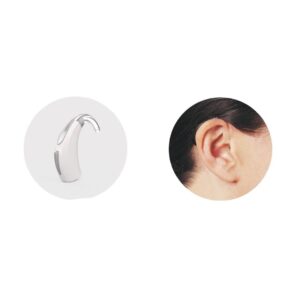
BTE (Behind the Ear)
Behind-The-Ear (BTE) hearing aids are worn comfortably behind the ear and are connected to a custom earpiece inside the ear canal through a small tube. This style is highly versatile and suitable for all ages and most degrees of hearing loss, including severe to profound. BTE devices are durable, easy to handle, and often come in various colors. They also support advanced features like Bluetooth, rechargeability, and directional microphones.
ITC (In the Canal)
In-The-Canal (ITC) hearing aids are custom-made to fit partially in the ear canal. They are less visible than BTE models but still large enough to include features like volume control and wireless connectivity. ITC aids are suitable for mild to moderate hearing loss and are a good balance between functionality and discretion, making them a popular choice for many users.
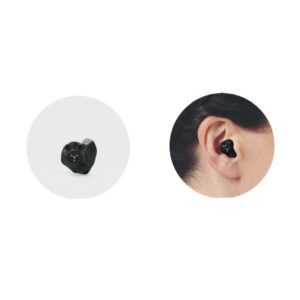
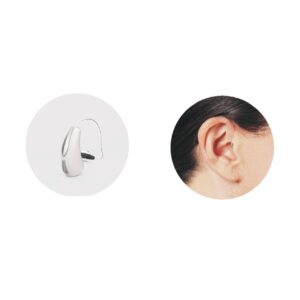
RIC/CRT (Receiver in Canal)
Receiver-In-Canal (RIC) or Canal Receiver Technology (CRT) is one of the most popular and modern hearing aid styles today. These are mini BTE devices where the receiver (speaker) sits directly in the ear canal, connected to the main device by a thin wire. This design provides better sound quality, especially in noisy environments, and supports features like AI, Bluetooth, and remote adjustments. RIC aids are lightweight, discreet, and suitable for mild to severe hearing loss.
CIC (Completely in Canal)
Completely-In-Canal (CIC) hearing aids are custom-fit and sit deep inside the ear canal, making them almost invisible from the outside. Designed for mild to moderate hearing loss, CIC devices offer a discreet solution for users who prioritize appearance. Due to their small size, they may have fewer manual controls but still deliver excellent sound clarity in quiet environments.
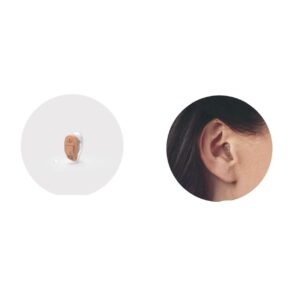
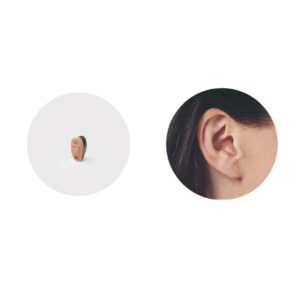
IIC (Invisible in Canal)
Invisible-In-Canal (IIC) hearing aids are the smallest and most discreet hearing aids available. They are placed even deeper in the ear canal than CIC models and are virtually undetectable when worn. IIC aids are best for mild to moderate hearing loss and for those who want the most cosmetically appealing solution. Due to their size, they may not include advanced features or suit individuals with narrow ear canals or severe hearing loss.
ITE (In-The-Ear)
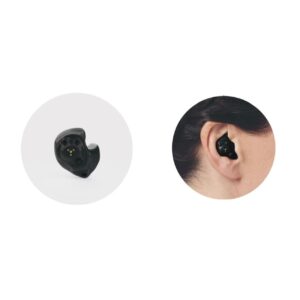
In-The-Ear (ITE) hearing aids are custom-made to fit entirely within the outer portion of the ear. Slightly larger than ITC models, ITE devices are easier to handle and can accommodate more powerful components, making them suitable for individuals with mild to severe hearing loss. Their larger size allows for additional features such as volume control, programmable settings, and wireless connectivity. ITE hearing aids offer a good balance between visibility, functionality, and comfort, and are a great option for users who want advanced features without wearing a device behind the ear.
Next-Generation Hearing Aid Technology With Innovative Features for Smarter Hearing
- Crystal Clear Digital Speech Processing
- AI-Powered Adaptive Sound Technology
Smartphone App Control & - Personalization
Bluetooth Connectivity for Phone, TV & Music - Rechargeable All-Day Battery Technology
- Remote Fine-Tuning & Virtual Adjustments
- Automatic Noise Reduction in Crowded Places
- Directional Microphones for Better Speech Clarity
- Tinnitus Masking & Sound Therapy Features
- Seamless Connectivity with Android & iPhone
- Water-Resistant & Sweat-Resistant Designs
- Comfortable, Discreet & Nearly Invisible Styles
- Personalized Hearing Experience Powered by AI
- Enhanced Listening in Restaurants & Noisy Environments
Get Started With Karnaadhar
Get started with Karnaadhar today and take the first step toward better hearing, clearer speech, and improved quality of life.
Karnaadhaar
Shop no. 4, Madhushree CHS, Plot No. 33, Sector 40. Seawoods West, Opp. Kendriya Vihar and DMart, Navi Mumbai Navi Mumbai (New Mumbai),Maharashtra,India
Other Pages
- 2025 Hearing Karnaadhar. All rights reserved.